

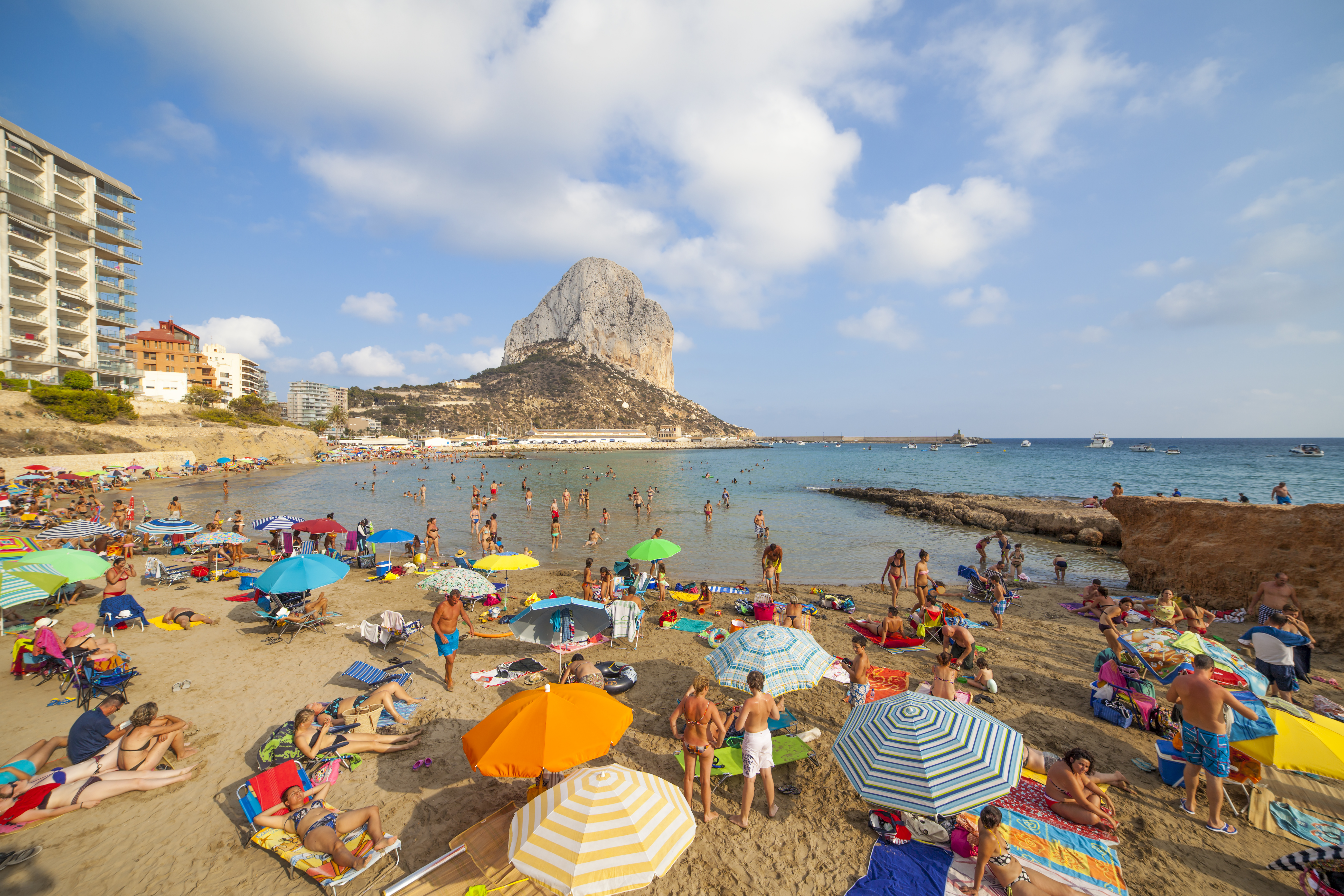
Calpe has become an Adhered Smart Tourist Destination after completing the STD diagnostic report, which was prepared by SEGITTUR (State Society for the Management of Innovation and Tourism Technologies), a model promoted by the Spanish Secretary of State for Tourism.
This recognition, valid until December 2027, certifies that Calpe has begun to implement the STD model and is part of a group of destinations at the forefront of tourism development. It is a strategy for the future based on governance, sustainability, accessibility, innovation and technology as its cornerstones.
The implementation of the STD methodology has been made possible thanks to the collaboration of all municipal departments, which have contributed to providing the information necessary to evaluate the destination based on the 97 requirements and 261 indicators that make up the model, corresponding to the set of key pillars of a STD.
This information gathering has enabled SEGITTUR to assess the degree of maturity of Calpe as a destination in each requirement and subsequently propose recommendations to be implemented by the destination for its transformation into a Smart Tourist Destination. Calpe achieves an overall compliance rate of 66.5%. The Sustainability axis stands out in particular with 79.8%.
In this area, the analysis of the carrying capacity of beaches for capacity control, the improvement of the water performance of the supply network (92.2% in 2024), the municipal strategy for adaptation to climate change, the promotion of sustainable tourism and the enhancement of the Baños de la Reina archaeological site stand out. However, there is a need to make progress in sustainable mobility, waste management, water reuse, environmental monitoring and tourism sustainability.
In the area of governance, with 69% compliance, the strategic planning of tourism, internal coordination and public-private consultation and participation bodies, and the monitoring of tourism demand and supply, as well as the preparation of quarterly business confidence reports, are positively assessed. Areas for improvement include transparency, regular consultation to ascertain the impact of tourism on the daily life of the population of Calpe, analysis of the economic impact of tourism and evaluation of the return on investment. The creation of a Smart Office to promote technological monitoring, systematic innovation and the coordination of projects linked to the STD, among other actions, is also recommended.
In the area of accessibility, Calpe scores 68.6%. The report highlights the planning of accessible tourism, the ‘Somos Turismo’ awards, specific training, awareness campaigns and the provision of accessible sports equipment. Proposed improvements include the development of a municipal universal accessibility plan, the strengthening of accessibility management resources and structures, and the expansion of accessibility measures in transport, public spaces, signage and services, etc.
Finally, the areas of Technology (51.2%) and Innovation (39.2%) present the greatest opportunities for improvement. Although progress has been recognised in connectivity, sensor technology and the creation of innovative tourism products, it is recommended that a comprehensive “smart” technology strategy be developed, as well as a strategy to promote innovation that includes social innovation programmes with an impact on tourism. In addition, it is suggested that the destination continue to promote the development of existing tools, such as the city platform and the open data portal. Other issues include promoting innovation in processes and public procurement, strengthening the tourism innovation ecosystem and promoting innovation projects in collaboration with businesses and academia.
The Smart Tourist Destinations programme, managed by SEGITTUR, seeks to improve the competitiveness of Spanish destinations and the quality of life of their citizens. A Smart Tourist Destination is defined as an innovative tourist destination, consolidated on a cutting-edge technological infrastructure, which guarantees the sustainable development of the tourist territory, accessible to all, facilitating visitor interaction and integration with the environment and increasing the quality of their experience at the destination and improving the quality of life of residents.